3D Printing Materials
The 3D printing materials play a decisive role in the final result of an object. Each material has different characteristics such as strength, flexibility, thermal resistance and level of detail.
At Get3D, different types of materials are used depending on the printing technology, such as FDM, SLA and SLS, to cover needs from simple prototypes to industrial components.
The right choice of material depends on the application of the object, the mechanical requirements and the accuracy needed by the model.
FDM Filaments
FDM technology uses thermoplastic filaments that are melted and deposited layer by layer to create the object. These materials cover a wide range of applications, from simple prototypes to durable functional components.

PLA
PLA is one of the most popular 3D printing materials. It offers easy printing, good surface quality and is often used for prototypes, models and decorative objects.
PETG
PETG combines ease of printing with increased mechanical strength and moisture resistance. It is used for functional components and technical applications.
ABS
ABS is a strong thermoplastic material with good resistance to temperature and mechanical loads. It is suitable for technical components and mechanical applications.
ASA
ASA offers similar mechanical strength to ABS but has excellent resistance to UV radiation and weather conditions.
TPU
TPU is a flexible 3D printing material used for components that require elasticity, such as protective parts and seals.
PETG-CF
Carbon fiber reinforced PETG offers greater rigidity and mechanical strength compared to classic PETG.
PA
Nylon (PA) is known for its high strength and is used in functional components and mechanical applications.
PA-CF
Carbon-fiber-reinforced Nylon offers exceptional rigidity and mechanical strength for demanding technical components.
PA-GF
Glass fiber reinforced Nylon offers increased thermal and mechanical resistance.
PP
Polypropylene combines low weight with high mechanical strength, as well as high resistance to most chemicals.
PP-CF
Polypropylene with carbon fibers combines low weight with high mechanical strength.
SLA/LCD Resins
SLA technology uses photopolymerizable resins that are solidified by laser or UV light. It allows the production of objects with very high precision and excellent detail.

Standard Resins
Standard resins are used for prototypes and high-detail models.
Technical Resins
Technical resins have improved mechanical properties such as increased resistance to temperature, impact and loads.
Biomed Reins
Biomed resins are certified for medical applications and are used in dental models and medical prototypes.
SLS/ MJF Powders
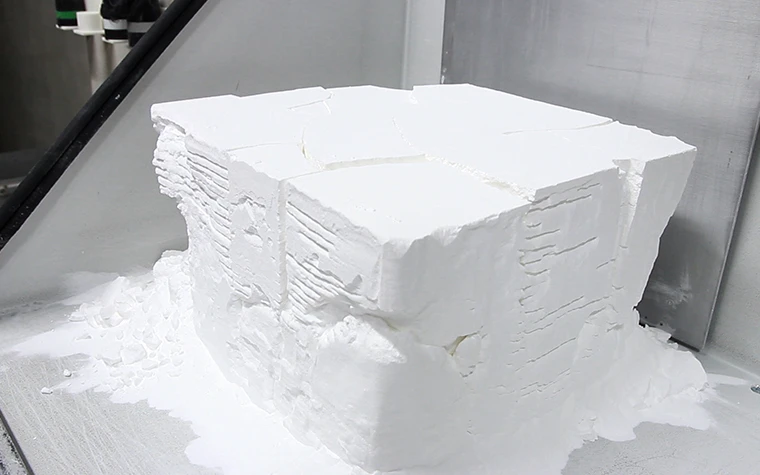
SLS and MJF technologies use polyamide powder that is fused with laser or thermal energy to create durable and functional parts.
PA12
PA12 is the most common material in powder-based 3D printing technologies and offers high strength and stability.
PA11
PA11 is more flexible than PA12 and offers greater impact resistance.
PA11-CF
Carbon fiber reinforced PA11 offers excellent mechanical strength and stiffness.
PP
PP is used for applications that require chemical resistance and flexibility.
TPU
TPU is a flexible 3D printing material used for components that require elasticity, such as protective parts and seals.

 Greek
Greek