
Rapid Prototyping with 3D Printing
From a digital design to a real, functional object in a short time—to test the product before proceeding to final production.
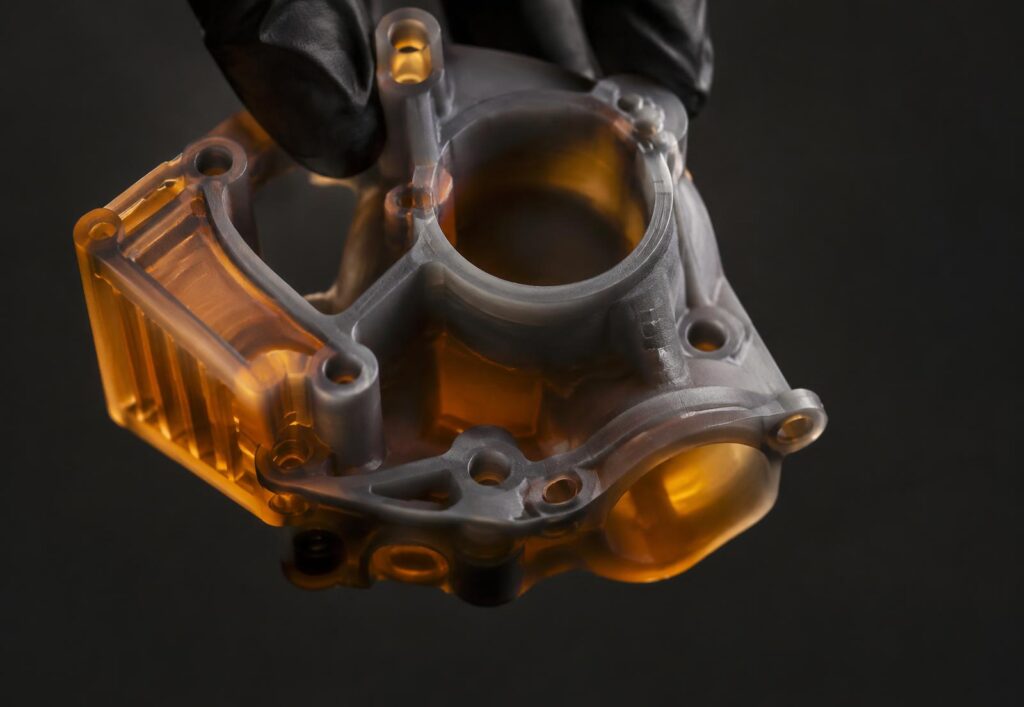
Rapid prototyping enables the transformation of a digital design into a real, functional object within a short timeframe. Through 3D printing-based rapid prototyping, a product can be tested in practice prior to final production, allowing for the early identification of issues regarding design, assembly, ergonomics, or functionality.
At Get3D we combine different 3D Printing technologies with 3D Design and Product Development, so that each prototype is manufactured based on the actual requirements of the application. Depending on the project, we can recommend FDM, SLA, SLS, or other production methods, and select the appropriate material and required tolerances.
This means that rapid prototyping is not limited to the creation of a simple sample. The goal is to create a prototype that can be used for testing, evaluation, and improvement, and ultimately for the transition to production.
From 3D model to real prototype
A CAD file may show that a product functions correctly on screen. However, the actual prototype makes it possible to determine what happens when the product is in the user's hands or integrated into the final system.
It may be necessary to verify whether two components assemble correctly, whether a cover fits within the proper tolerances, whether the ergonomics are suitable, or whether a mechanical part can meet the application's requirements.
By constructing a physical prototype, these tests can be conducted much earlier—before significant capital is invested in molds, tooling, or large-scale production.
The process can begin with a ready-made CAD file or with an initial concept requiring design and engineering development. Get3D supports the entire process, from design and material selection to prototyping and refinements.
Not all prototypes have the same purpose.
Functional Prototypes και Visual Prototypes
Visual Prototype
The priority may be the product's appearance, geometry, surface finish, and presentation. Such a prototype can be used for presentations to clients, investors, or partners, or for design evaluation.
Functional Prototype
The component must be suitable for use in actual tests, capable of being assembled with other parts, or able to meet specific mechanical requirements.
Therefore, the choice of technology and material is not based solely on the object's appearance, but on what the prototype needs to do.
Selecting the technology is a significant part of rapid prototyping. There is no single method suitable for every type of prototype.
Which 3D printing technology is suitable for your prototype?
FDM 3D Printing
Suitable when the goal is the rapid and cost-effective production of a prototype, particularly when a functional part or geometric testing is required. It can be used for larger prototypes, mechanical components, housings, and fixtures, where strength and cost play a significant role.
SLA 3D Printing
It offers high detail and excellent surface quality. It is particularly useful when the prototype needs to accurately reproduce fine details or when the product's appearance is of particular importance.
SLS/MJF 3D Printing
It is used when the prototype needs to be more focused on functionality and mechanical application. Production without supports allows for complex geometries and components suitable for real-world testing.
SLM και άλλες τεχνολογίες
For functional prototypes and applications requiring a specific combination of mechanical properties, geometry, and productivity, technologies such as SLM can also be considered.
Not sure which technology you need?
Pre-production rapid prototyping
A prototype can lead to changes in dimensions, tolerances, geometry, or the assembly method. Multiple versions of the same product may also be manufactured so that they can be compared in practice.
Thus, development does not stop at the first prototype. A cycle follows:
Rapid prototyping begins with the 3D model and product requirements. We select the appropriate 3D printing technology and material based on the prototype's intended use, ensuring that the initial sample meets the application's actual needs as effectively as possible.
In practice, the prototype is used to test its fit, assembly, ergonomics, and functionality. Test results lead to design changes and improvements before proceeding to the next version.
Following the necessary improvements, the new prototype is built, and the process is repeated until the final design is confirmed. Once the product is ready, it can transition from rapid prototyping to production, whether in small or larger quantities.
This approach is part of Get3D’s product development process, where prototyping is followed by testing and optimization.
From the Prototype to production
Rapid prototyping can be the first step of a larger manufacturing project.
Once the design is complete and the product has been tested, the process can proceed to small-, medium-, or large-scale production, depending on the project requirements.
This is where Rapid Prototyping naturally connects with Get3D’s Manufacturing Hub, combining product development, 3D printing, reverse engineering, and production.
Do you need a prototype for your product?
Whether you already have a complete CAD file or are still at the conceptual stage, we can review your project and recommend the appropriate manufacturing technology. Send us the file or describe what you wish to manufacture.

 Greek
Greek