
What is Reverse Engineering?
The Reverse Engineering, or else Reverse Engineering, is the process in which an existing object is analyzed, disassembled and studied, with the aim of understanding its construction, creating a digital model and, ultimately, its reconstruction or optimization.
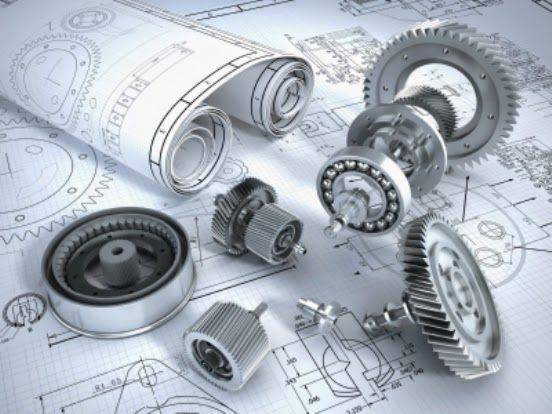
Reverse Engineering in practice: From need to solution
In today's era, many industries and businesses face challenges related to old components, unavailable spare parts, or equipment without manufacturing drawings. The Reverse Engineering provides a solution where production from scratch is unprofitable or time-consuming.
Our team takes care of the entire process — from physical scanning of the object, until delivery of editable CAD file, suitable for production. Our experience covers high precision mechanical parts applications in high precision mechanical parts, technical plastic parts, but also complex geometries.
Investing in professional tools for scanning and specialized modeling, we offer solutions that respect the geometry and functionality of the original object. Whether it is a one-off reproduction or preparation for mass production, we ensure quality results in an affordable time.
We collaborate with engineers, factories, industries and technical companies, adapting the process to the requirements of each project. With our expertise, Reverse Engineering is transformed from a challenge… into a development tool.
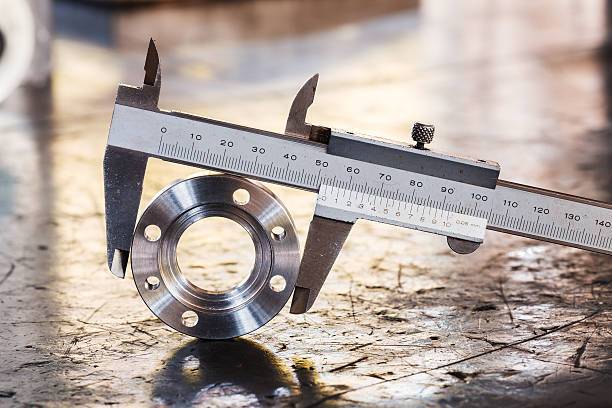
Where is Reverse Engineering applied?
Reverse engineering technology finds application in a variety of sectors:
Industry & Construction
Remanufacturing of components without technical drawings
Maintenance and Replacement
Reproduction of old, worn or damaged parts
Product optimization
Improvement of an existing design based on the physical prototype
Automotive & Aftermarket
Scanning and modifying spare parts or aerodynamic elements
Archaeology & Cultural Heritage
Digitization of objects of cultural interest
The Reverse Engineering Process
The process usually includes the following steps:
1️⃣ Scanning the object (3D Scanning)
Objects are scanned with specialized 3D Scanners, like:
- Structured light scanners
- Laser Scanners
- Photogrammetry
The result is a file .STL ή .OBJ, which contains a mesh of the object's geometry.
2️⃣ Scan cleaning and editing
The mesh file is cleaned, repaired and exported for further processing. Errors, noise and unwanted details are removed.
3️⃣ CAD modeling
The mesh is used as a guide to create a parametric CAD file, fully editable. This allows:
- Customization or redesign
- Technical drawings (2D/3D)
- Parametric processing
4️⃣ End use
The final CAD file can be used for:
- Production of products or components
- Manufactured via CNC or 3D printing
- Analysis (e.g. FEA, CFD)
Advantages of Reverse Engineering
✅ Create CAD from physical objects
✅ Save time and cost on old parts
✅ No initial designs required
✅ Copy/improve spare parts
✅ 3D Printing compatibility for immediate production
✅ Ideal for archiving or archiving objects
Combination with 3D Printing
At reverse engineering works ideally in combination with 3D Printing, since after creating the CAD, the component can be produced in minimal time and with high accuracy.
Contact & Assignment
If you have a part without an available drawing, an old mold, or a specialized part that needs to be reproduced:
👉 Contact us to guide you.
If you already have a file, you can upload it via Online 3D Print tool for immediate costing and ordering.
FAQ
How accurate is the process?
The accuracy depends on the type of scanner. We can reach up to ±0.02mm.
In what format do you deliver the files?
CAD files are delivered in STEP, IGES, STL format or whatever the customer needs.
Can I bring you a broken piece?
Yes, the more material we have, the more faithful the reproduction can be.
Printing is done directly after scan;
In simple cases, yes, but ideally, CAD modeling is done first for more correct geometry and modifications.

 Greek
Greek